


Choosing the right quantity surveyor starts with understanding what you need them to do and finding someone with relevant experience of projects similar to yours.
A QS can be involved from your first project budget through design, procurement and construction to agreeing the contractor’s final account. They can have a significant influence on how well you understand your costs, how financial risks are dealt with and how quickly you know when something changes.
Price matters, but it shouldn’t be the only comparison. Look at the people, relevant experience, proposed scope of services, approach to risk, procurement and reporting, and whether they can give you the information you need to make decisions throughout the project.
1. Look for experience relevant to your project
Quantity surveying covers a wide range of construction types. A QS who spends most of their time working on major infrastructure projects will have very different experience from someone working on residential developments, office fit-outs or commercial refurbishments.
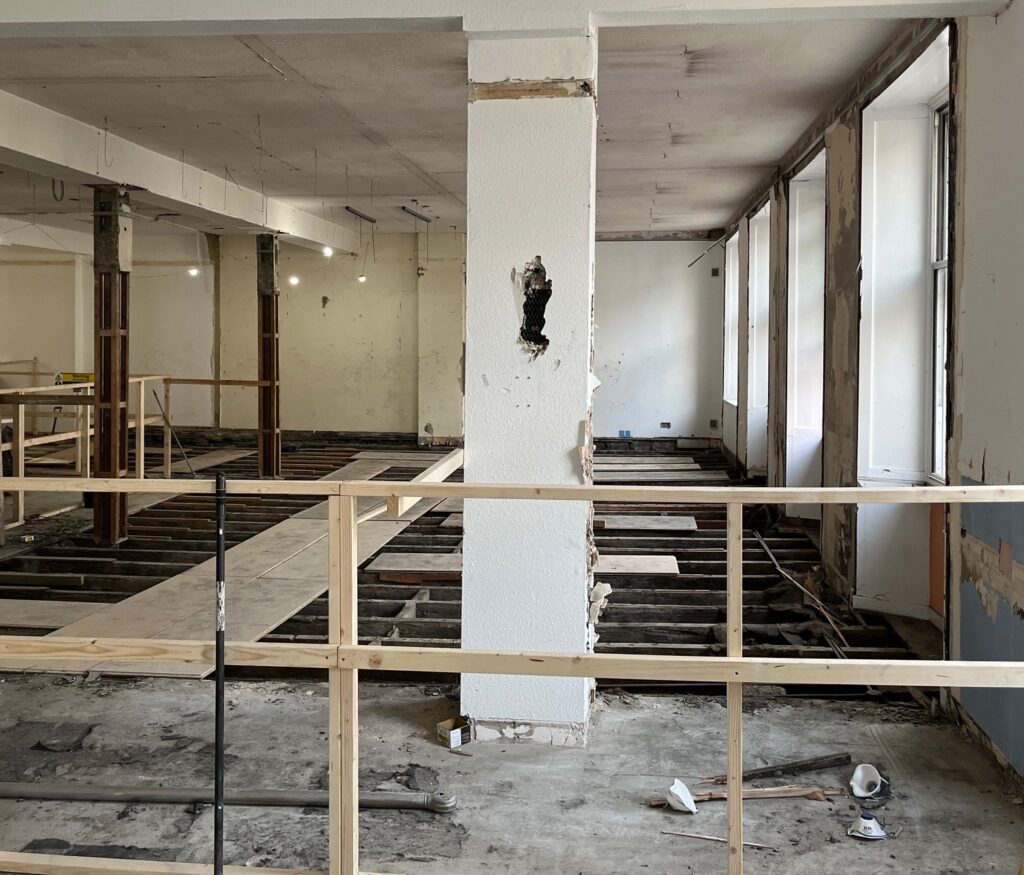
Start by asking about recent projects that are comparable with yours. Look beyond the sector and project value too, because a £10m new-build office on an open site has a very different cost and risk profile from a £10m refurbishment of an occupied listed building in a city centre.
For a commercial refurbishment, you might want to know:
- Have they worked on similar existing buildings?
- Have they delivered projects of a similar size and complexity?
- Do they understand the local construction market?
- Have they worked with the procurement route you’re considering?
- Do they have experience of occupied or phased refurbishment?
- Have they dealt with the types of existing-building risks your project is likely to contain?
You don’t need someone who has delivered an identical project. You do need to be comfortable that they understand the issues they’re likely to encounter.
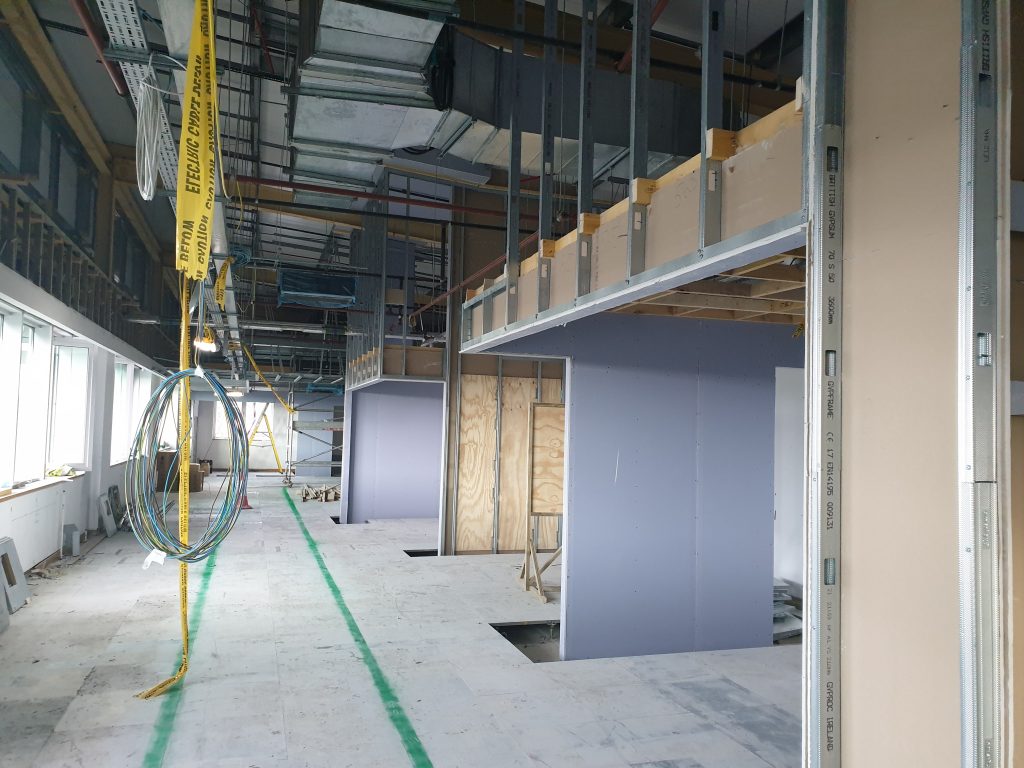
At Torridon, we’ve deliberately concentrated much of our work around refurbishment, retrofit and fit-out. Existing buildings bring particular challenges around surveys, existing services, unknown conditions, phasing, logistics and design development, so relevant experience matters.
A useful question to ask is “Can you show me 3 recent projects that are similar to mine, and explain what your role was?”
2. Find out who will actually work on your project
This is easy to overlook during consultant selection. You might meet a Director during the interview and receive a proposal containing decades of company experience. You still need to know who will deliver the service.
Who will prepare your cost plans?
Who will attend design meetings?
Who will deal with the contractor?
Who will prepare your monthly reports?
How involved will the senior people remain once the project is underway?
Different consultancies have different staffing models. Larger businesses may have access to considerable resources and specialist teams. Smaller practices can have a different structure with greater day-to-day involvement from senior staff. It’s important to understand the team you’re buying, and how they will divide up the workload over the course of the project.
At Torridon, every project has a Director involved throughout the commission in a hands-on role, leading the project, and supported by the wider project team.
3. Compare the scope of services as well as the fee
QS fee proposals aren’t always directly comparable. A lower fee may reflect a more efficient way of delivering the same service. It may also reflect a different interpretation of what’s required.
Check assumptions around:
- meetings and site visits
- cost plans and updates
- measurement
- procurement advice
- tender documentation
- tender analysis
- cost reporting
- valuations
- change control
- final account
- project duration
Look carefully at exclusions too. For example, one QS may have allowed for a single stage tender exercise while another has included an initial package of early works followed by a main contract tender. One may have allowed for monthly site visits while another plans to attend fortnightly.
The headline fees aren’t comparable until you understand those differences. Ask what has been allowed for, what’s excluded and what circumstances would result in an additional fee.
4. Ask how they establish the project budget
The first budget can influence the whole project. Ask how the QS would establish it.
Where does their cost information come from? What comparable projects will they use? How will they adjust that information for your building, location, programme and specification? How will they deal with inflation and incomplete design information?
You should also understand the boundaries of the budget. Does it include professional fees? Surveys? Furniture? IT? Statutory costs? Client-direct purchases? VAT? And how are risk and contingency being treated? A well-produced budget should make these things clear.
At Torridon, this thinking forms part of our 5 principles of cost certainty:
Project ambition: clearly understanding the brief and what the client wants to achieve.
Robust budget: establishing a realistic budget informed by the building, design, programme and potential risks.
Risk immunisation: identifying and dealing with cost risks throughout the project.
Project team: having the right consultants and contractors involved at the right time.
Tracking and reporting change: recording changes and their cost impact as the project develops.
You should be able to ask your QS how they’ve arrived at the budget and get an answer you understand.
5. Ask how they deal with risk
This is particularly important for refurbishment and retrofit projects because existing buildings contain uncertainty. Records can be incomplete. Existing services may need further investigation. There may be asbestos, structural issues, façade repairs, fire compliance requirements, restricted access or parts of the building that can’t be inspected until work starts.
A QS can’t remove every unknown, but they can identify areas of uncertainty, assess their potential financial impact and work with the wider project team to decide what can be investigated before major financial commitments are made.
Ask how they approach risk allowances and contingency.
Ask what they would want investigated before tender.
Ask how risks are quantified, recorded and reviewed as the design develops.
I’d be very cautious around a budget that simply applies a percentage contingency without considering the individual risks within the project.
The aim should be to understand each significant risk as far as reasonably possible and decide what you’re going to do about it.
6. Ask to see their cost reporting
Ask to see an example cost plan and monthly cost report, with commercially sensitive information removed. Then ask yourself a simple question:
Can I understand it?
You should be able to see the approved budget, current forecast, committed costs, changes and remaining risk allowances without having to decipher the QS’s spreadsheet.
Good reporting should also distinguish between different types of change.
What has been instructed?
What has been approved?
What is still being considered?
What could still affect the final cost?
The level of information should suit the people using it. A property director who deals with construction every day may need something different from a board approving a major capital project for the first time.
A technically correct report has limited value if the people making decisions can’t understand what it’s telling them.
7. Find out how they manage change
Projects change. A client changes part of the brief. The architect issues a revised drawing. An investigation identifies additional work. A contractor raises a query that affects the design. The important part is how those changes are identified, assessed, approved and reported.
Ask your prospective QS what happens when something changes.
Who records it?
When is it costed?
Who approves it?
How does it appear in the cost report?
Ideally, you should understand the likely financial impact of a change before making the decision, wherever the programme allows.
This becomes particularly important on fast-moving refurbishment and fit-out projects. A large number of individually small decisions can have a material effect on the final cost.
8. Ask about procurement and tendering
Your Quantity Surveyor should be able to advise on how the project is procured, as well as what it costs.
Procurement affects the allocation of risk, the development of the design, the programme and the level of price certainty you can achieve at different stages.
Ask which procurement routes they would consider for your project. Their answer should reflect your circumstances.
A refurbishment with a fixed completion date, incomplete design information and significant existing-building risk needs different consideration from a straightforward project with a completed design and flexible programme.
Also ask how they approach tendering. Who prepares the pricing information? How will tenders be compared? How will qualifications and exclusions be dealt with? How will they test whether apparently low prices are complete?
Procurement and tendering are significant parts of the QS role, so I’d want to understand their thinking before appointment.
9. Check professional qualifications and regulation
Look at the professional standing of both the consultancy and the individuals proposed for your project.
In the UK, many quantity surveyors obtain chartered status through the Royal Institution of Chartered Surveyors (RICS), using the designation MRICS or FRICS.
You can also check whether the consultancy itself is regulated by RICS. RICS-regulated firms have requirements covering areas including professional conduct, professional indemnity insurance and complaints handling.
Professional qualifications are only one part of your decision though. Relevant experience, technical ability and the people delivering the commission still matter.
Torridon is an RICS-regulated firm and a signatory to the Conflict Avoidance Pledge, which promotes collaborative working and early intervention to reduce contractual disputes.
10. Consider how they communicate
You’ll probably spend quite a lot of time with your QS. They will most likely need to explain complicated commercial issues in a way that lets you make a decision. Pay attention to this during the selection process.
Do they ask sensible questions about the project?
Are they trying to understand what you’re trying to achieve and the things you’re concerned about?
Can they explain their advice clearly?
Will they challenge the design team, contractor or client when they think something needs to be questioned?
Good cost consultancy requires judgement. You want somebody prepared to give you a clear view and explain why.
11. Consider whether you need a specialist or multidisciplinary consultancy
There are lots of different types of QS business.
Some concentrate predominantly on quantity surveying / cost consultancy. Others provide project management, building surveying, architecture, engineering and other disciplines within the same organisation.
Scale varies considerably too, from small local practices to global consultancies employing thousands of people.
Consider what your project requires. A major infrastructure programme may require specialist resources available within a large international consultancy. A refurbishment project may will almost certainly require a team with concentrated experience of existing buildings.
You may also prefer to procure several professional services from one organisation, or appoint your consultants independently. Understand the differences and choose the model that suits your project and team.
12. Consider their understanding of retrofit and sustainability
This will matter more on some projects than others. For existing buildings, decisions around retaining structure, upgrading façades, replacing services, improving energy performance and selecting materials can have significant capital and operational cost implications.
Your QS should be able to cost the options being considered by the design team and explain their financial implications.
This becomes particularly relevant where you’re considering refurbishment against redevelopment, undertaking a major retrofit or targeting a particular environmental or performance standard.
Torridon has contributed to industry work on commercial retrofit through the UK Green Building Council, and refurbishment and retrofit form a significant part of our project work.
13. Speak to previous clients
References can tell you things a proposal can’t. Ask to speak to a client from a comparable project, preferably one who worked with the people being proposed for yours.
I’d ask about:
- how responsive the QS was
- whether their budgets and forecasts were reliable
- how clearly they reported costs
- whether they raised problems early
- how they dealt with difficult commercial discussions
- how the final cost compared with expectations
I’d also ask whether they’d appoint the same team again – their answer can tell you quite a lot.
14. Don’t select your QS on fee alone
QS fees should be properly tested. Value for money matters. Consider the fee in relation to the financial decisions the consultant will be advising you on.
On a multi-million-pound construction project, a relatively small movement in the eventual construction cost can be considerably greater than the fee difference between 2 consultants.
This doesn’t mean choosing the most expensive consultant either. Look at the scope, people, experience and proposed approach alongside the fee.
If one proposal is significantly cheaper, ask why. There may be a perfectly good explanation. The important thing is understanding the difference before you appoint.
What questions should you ask a quantity surveyor before appointing them?
If you’re interviewing potential quantity surveyors, I’d have these questions in front of me:
- What recent projects have you delivered that are similar to ours?
- Who will actually work on our project?
- How involved will the Director or senior QS be?
- How would you establish and test our initial budget?
- What do you see as the main cost risks on our project?
- What would you want investigated before we go to tender?
- Can we see an example cost plan and cost report?
- How do you manage and report changes?
- What procurement approach would you consider and why?
- How will you prepare and manage the tender process?
- What’s included and excluded from your fee?
- What would cause your fee to change?
- Can we speak to a client from a similar project?
The answers should give you a much clearer picture of how each consultant will work than company credentials alone.
How should you compare quantity surveyors?
I’d compare prospective QS appointments across 5 areas:
Relevant experience
Have they delivered projects with similar characteristics, complexity and risks?
People
Are you confident in the individuals who will actually deliver the service, and do you understand how involved the senior team will be?
Approach
Can they clearly explain how they’ll manage the budget, risk, procurement, tendering, change and reporting?
Scope
Are you comparing equivalent services and do you understand the assumptions and exclusions?
Fee
Does the proposal represent good value for the service and people being provided?
For a larger or more complex project, you can score these formally as part of a consultant tender process and use the same criteria during interviews.
How do you choose a QS for a refurbishment or retrofit project?
Relevant experience becomes particularly important when you’re working with an existing building.
Refurbishment projects can involve incomplete records, hidden conditions, existing services, asbestos, structural alterations, façade works, occupied areas, phasing and restricted access. Those issues can affect the budget, procurement strategy and eventual construction cost. Ask prospective quantity surveyors how they’ve dealt with similar issues before. Then ask how they’d approach them on your project.
I’d expect their answer to involve understanding the existing building, identifying areas of uncertainty, working with the wider design team and using surveys and investigations to improve the information available before major financial commitments are made.
There will still be unknowns. The important thing is knowing what they are, understanding their potential cost impact and having a plan for dealing with them.
How does Torridon approach quantity surveying / cost consultancy?
Torridon is an RICS-regulated cost consultancy specialising in refurbishment, retrofit and fit-out projects.
Our approach is based around 5 principles of cost certainty: understanding the project ambition, establishing a robust budget, dealing with risk, having the right project team and tracking and reporting change.
We spend time early in a project understanding the client’s brief, the existing building and the available budget. As the design develops and more information becomes available, the cost information develops with it.
Every Torridon project has Director involvement throughout the commission.
If you’re comparing Torridon with other quantity surveyors, ask us the same questions we’ve suggested throughout this article.
Ask who’ll work on your project. Ask us to show you comparable projects. Ask what risks we see. Ask how we’d establish your budget. Ask to see our reporting. Ask exactly what’s included in our fee.
You should choose the quantity surveyor whose experience, people and approach suit your project.
About the author

David Shaw
Director at Torridon | Chartered Quantity Surveyor
Cost consultancy expert specialising in commercial refurbishment and fit-out projects
Get in touch: